.png)
A Stomach Parasite Is Spreading Across America — and the System Built to Stop It Was Quietly Dismantled
Every summer, families across America fire up grills, toss fresh salads, and trust that the food on their tables is safe. That trust depends on systems most people never think about — until those systems disappear.
Right now, a parasitic illness called cyclospora is spreading through dozens of U.S. states, causing what doctors describe as explosive, watery diarrhea that can last for weeks. And the federal early-warning system designed to catch outbreaks like this one before they spiral out of control is no longer fully operational.
What Is Cyclospora — and Why Should You Care?
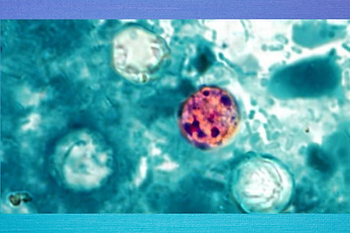
Cyclospora cayetanensis is a microscopic parasite that lives in contaminated food and water. When someone swallows it — often through fresh produce like leafy greens, herbs, or berries — it infects the small intestine and triggers prolonged, debilitating illness. Symptoms can include severe watery diarrhea, stomach cramps, nausea, fatigue, and significant weight loss. Without treatment, symptoms can drag on for weeks or even months, hitting children, elderly individuals, and people with weakened immune systems the hardest.
Health officials have not yet identified a common food source behind this summer's outbreak, and the CDC has stated it has no evidence connecting the cases into a single, multistate outbreak. That uncertainty is itself part of the problem — and it connects directly to a decision made in Washington one year ago.
The Safety Net That Was Rolled Back
For nearly three decades, a program called FoodNet served as the backbone of America's foodborne illness surveillance. It was a collaborative effort between the CDC, the U.S. Department of Agriculture, and state health departments, and it tracked eight dangerous pathogens — including cyclospora, listeria, campylobacter, shigella, vibrio, and yersinia — in addition to better-known threats like salmonella and E. coli.
In July 2025, the Trump administration scaled back FoodNet, narrowing its mandatory tracking to just two pathogens — salmonella and E. coli — and making surveillance of cyclospora and five other pathogens optional for participating states. Around the same time, the CDC dissolved its Division of Parasitic Diseases and Malaria, reassigning remaining specialists to other parts of the agency and further reducing the pool of experts trained to investigate parasite-driven outbreaks.
One year later, cyclospora is driving the largest cyclosporiasis outbreak seen in years. Investigators are working with incomplete information, trying to track a fast-moving public health threat through a system that is no longer built to catch it early.
Scientists Are Raising the Alarm
Public health researchers say this moment was predictable. Craig Hedberg, a professor in the Division of Environmental Health Sciences at the University of Minnesota, has pushed back hard against the rationale used to justify the cuts. Officials framed the reduced surveillance as eliminating duplication, but Hedberg argued the cuts go far deeper than that.
"[The cuts] normalize the idea that foodborne disease surveillance is expensive and unimportant," Hedberg said, calling it instead "the foundation of our food safety system."
When surveillance is weakened, investigators lose the ability to connect dots across state lines. Without robust, real-time data flowing from multiple states into a central system, it becomes far harder to identify whether sick people in Texas, Florida, and New York all ate the same contaminated batch of cilantro or bagged salad mix — and far harder to pull that product off shelves before more families are hurt.
What Families Can Do Right Now
While investigators work to piece together this outbreak, health officials are urging common-sense precautions at home. Wash all fresh produce thoroughly under running water, even items labeled pre-washed. Cook leafy greens when possible, since heat kills the parasite. Avoid pre-washed bagged salad mixes, which have been linked to cyclospora outbreaks in past years.
These are sound habits regardless of the circumstances. But they place the burden of protection squarely on individual families — at a moment when the broader public health infrastructure meant to protect everyone is working with fewer tools, fewer specialists, and less data than it had just twelve months ago.

